 United States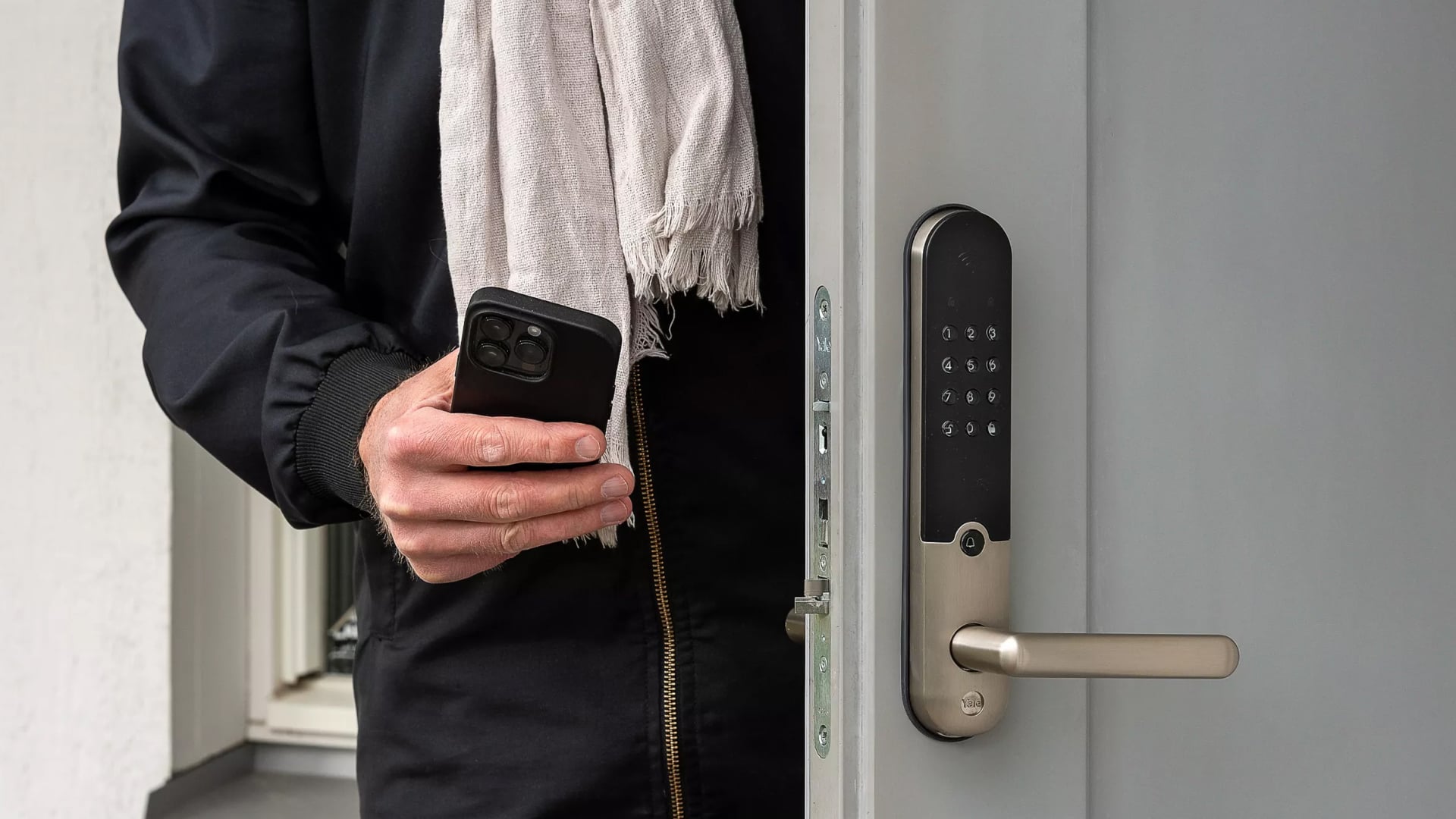
It is a feeling everyone knows: you leave the house in a rush, get halfway to work, and suddenly panic: "Did I lock the front door?" With a traditional lock, your only options are to stress about it all day or return home to check.
Smart locks have changed this dynamic. They are quietly becoming a usual part of modern home automation, offering convenience that old-fashioned deadbolts cannot match. But what exactly goes on inside these devices, and is it time for you to upgrade?
What is a smart lock?
So, what is a smart lock? It is an electromechanical device that locks and unlocks a door upon receiving instructions from an authorized device.
Although smart locks still use a physical locking mechanism (usually a steel deadbolt) to secure the doorframe, they eliminate the need for a physical metal key to trigger it. Instead, they use cryptographic keys transmitted via wireless signals. Think of it as an evolution: the bolt is the same, but the "key" has become digital, invisible, and much harder to lose.

How do electronic door locks work?
To understand how smart locks work, you have to consider three main components: the mechanical part, the motor, and the wireless transceiver.
How do electronic door locks work in practice?
- Signal: you send a command via your smartphone app, keypad, or key fob.
- Motor: the lock's internal battery-powered motor is activated.
- Action: the motor physically turns the deadbolt mechanism, locking or unlocking the door just as your hand would with a thumb-turn.
In a standalone scenario, the lock can connect via Bluetooth. However, the real magic happens when the lock is a part of a connected ecosystem. For example, in the integration between Yale and Ajax Systems, the lock communicates directly with the Ajax hub. This means you don't have to stand next to the door to open it; the command is securely transmitted from your smartphone to the cloud, to the hub, and then to the lock.
Key features of a modern smart lock
Homeowners are switching to smart locks not only because they are new, but also because smart lock features make life easier.
- Remote door locking/unlocking. Let in a dog walker, a cleaner, or a family member who forgot their code, all while you are sitting at your office desk or relaxing on vacation.
- Activity monitoring. Traditional locks can't talk. Smart locks can. You can view a history log to see exactly who entered your home and when.
- Virtual access codes. Instead of hiding a key under the doormat (which is unsafe), you can create digital codes for guests. These codes are temporary and expire automatically when your guests leave your home.
- Automation. You can configure the lock to automatically bolt after a set period, ensuring your home is never left vulnerable by accident.

Smart door lock vs traditional
When comparing a smart door lock to a traditional deadbolt, the primary difference is in how they are controlled.
Feature | Traditional lock | Smart lock |
|---|---|---|
Convenience | Requires a physical key | App, code, key fob, or voice control |
Access sharing | Physical keys must be made | Send digital codes instantly |
Security | Vulnerable to picking or bumping | Encryption + tamper alarms |
Peace of mind | Uncertainty ("Did I lock it?") | Status check via apps |
Types of smart locks
There are several alternatives to traditional locks. Depending on your door type and preferences, you can choose from:
- Keypad locks. Require a PIN code to be entered. They are ideal for children who don't yet have smartphones.
- Retrofit locks. These replace only the internal thumb turn on your door. The benefit is that you keep your existing keys and external hardware, so the door's appearance remains unchanged.
- Handle sets. Completely replaceable units that include a handle, a lock, and a keypad in one sleek design.
Can smart locks be hacked?
This is the most common question potential buyers ask: can smart locks be hacked?
While no digital device is 100% immune to interference, reputable smart locks such as Yale use advanced encryption standards (AES) similar to those used in online banking. It is generally much more difficult for a burglar to hack a high-quality smart lock than to kick down a door or pick a standard pin tumbler lock.
By integrating a smart lock into a professional security system, you add a critical layer of protection. The system monitors the lock's connection. If the lock goes offline or if someone attempts to tamper with the device physically, the system instantly notifies you and the monitoring station.
Benefits of integrating Yale into the Ajax ecosystem
The true value of a smart lock becomes apparent when it stops being a standalone gadget and starts working with your home. By integrating a Yale lock into the Ajax app, you can create automation scenarios that simplify your daily routine:
- Arming on lock: you can configure the system so that when you lock the front door, it automatically switches to armed mode.
- Night mode: locking the door in the evening can automatically activate Night mode and secure your perimeter while you sleep.
- One app for everything: you don't need a separate app for the lock. You can view cameras, check detector status, and control doors all via the single Ajax interface.
Setting up a Yale lock is straightforward. For detailed steps, read our guide on how to add a Yale smart lock to your system.

FAQ
Do smart locks work if the Wi-Fi goes down?
Yes. Smart locks are usually battery-powered and handle authentication locally. Even without an internet connection, you can still unlock the door using Bluetooth, a keypad code, or a physical backup key.
What happens if the batteries die?
An Ajax app monitors battery levels and sends notifications in advance when it is time to change them. If the batteries are completely discharged, most models support using a physical key or have external contacts that allow powering the lock temporarily with a 9 V battery.
Can I still use my physical key?
Yes. Many smart lock models retain a traditional key cylinder. This provides a fail-safe manual entry method.
Do smart locks work in cold or wet weather?
Yes, high-quality outdoor smart locks are weatherproof. They are built to withstand extreme temperatures, rain, and snow.
Will a smart lock fit my door?
Most likely, yes. Smart locks are designed to fit standard door preparations. Many of them are "retrofit" ready, meaning they work with your existing deadbolt latch and strike plate.
What happens if I lose my phone?
Losing your phone does not mean you are locked out. You can still use your physical key or keypad. Also, because an Ajax app is protected by passcodes or biometrics, an intruder cannot simply open your app to unlock the door.
Does a smart lock affect my home insurance?
It might. Since an Ajax system is a professional-grade solution, mentioning that your lock is integrated into a monitored security system may qualify you for discounts. Check with your provider.
How many user codes can I create?
This depends on the model, but digital smart locks typically support dozens of unique user codes, so you can track exactly who entered.
Is there a monthly fee to use a smart lock?
Generally, no. Using the basic features of a Yale smart lock, such as locking, unlocking, and viewing history, via an Ajax app does not require a separate payment.
Why should you upgrade to a smart lock?
Smart locks are more than just futuristic gadgets; they are a practical evolution in home security. These locks provide a level of reliability and control that traditional locks cannot offer.
Whether you want to let a guest into your home or simply check the lock status, you can do it remotely. When paired with a robust ecosystem such as Ajax, a smart lock becomes a proactive guardian, seamlessly blending convenience with professional-grade security.

Roman Konchakivskiy
Head of Ajax Academy


